Planetary Health Education (PHUSE)
Categories
Branding
·
Website
Year
2026
Duration
8 Months
Client
D-HEST - ETH Zürich
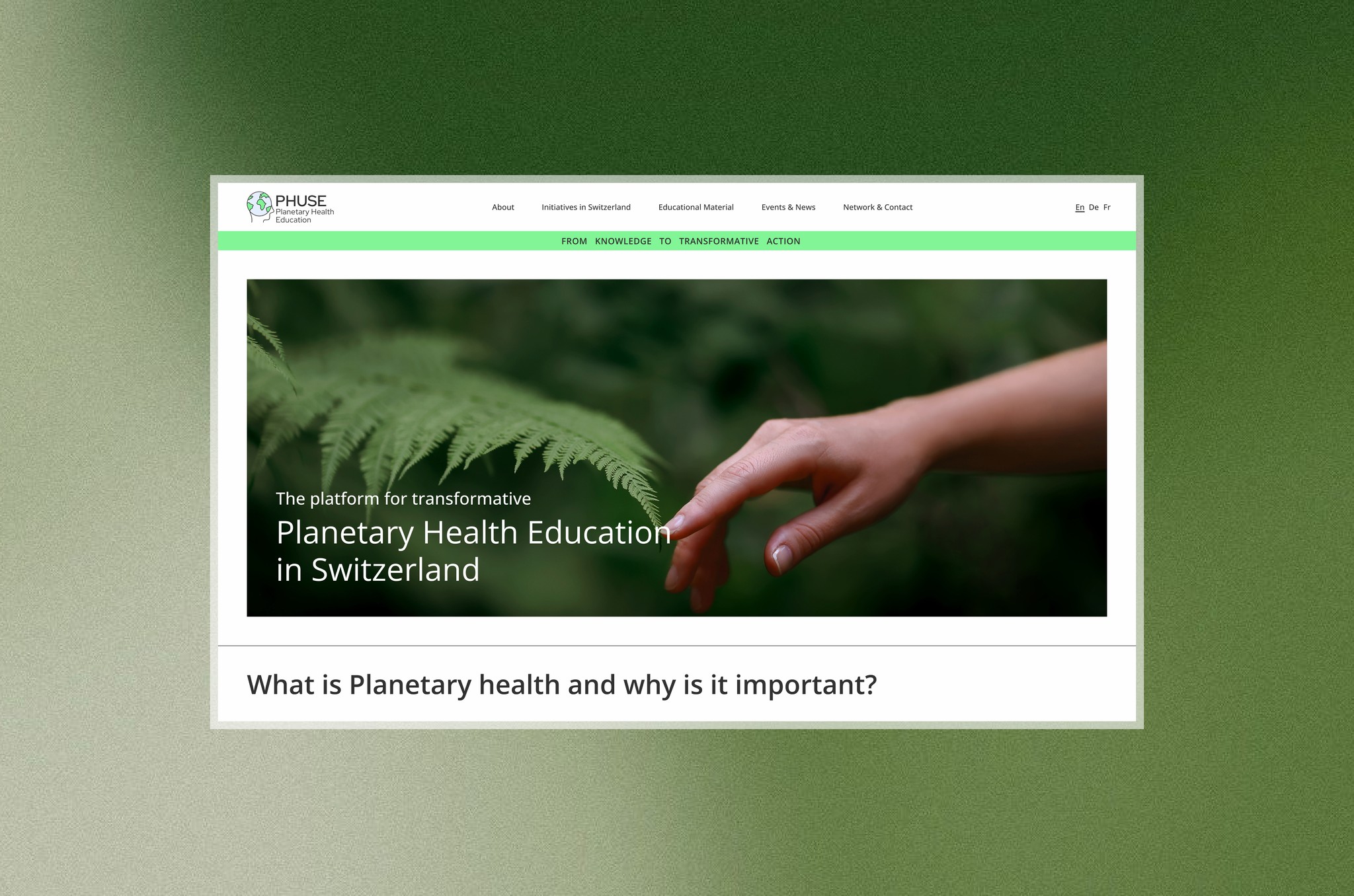
Overview
PHUSE is a national initiative funded by swissuniversities that works to integrate Planetary Health into health-related study programs across Switzerland.
Together with Tiffany Di Nunzio, I developed the visual identity and brand system for the platform. The goal was to create a modern and credible identity that reflects the connection between human and planetary health. The logo merges planetary and human elements, symbolizing this interdependence.
In addition, we structured and prototyped the foundation of the digital platform, designed as an open-access hub for educational materials, national initiatives, and a growing expert network.
PHUSE supports the transformation of health education toward a more sustainable and equitable future.
Logo Process
The development of the PHUSE identity started with defining the core values of the initiative: scientific credibility, collaboration, transformation, and the interconnectedness of human and planetary health.
Through several iterations and feedback loops with the client, the logo was refined to improve clarity, balance, and recognizability.
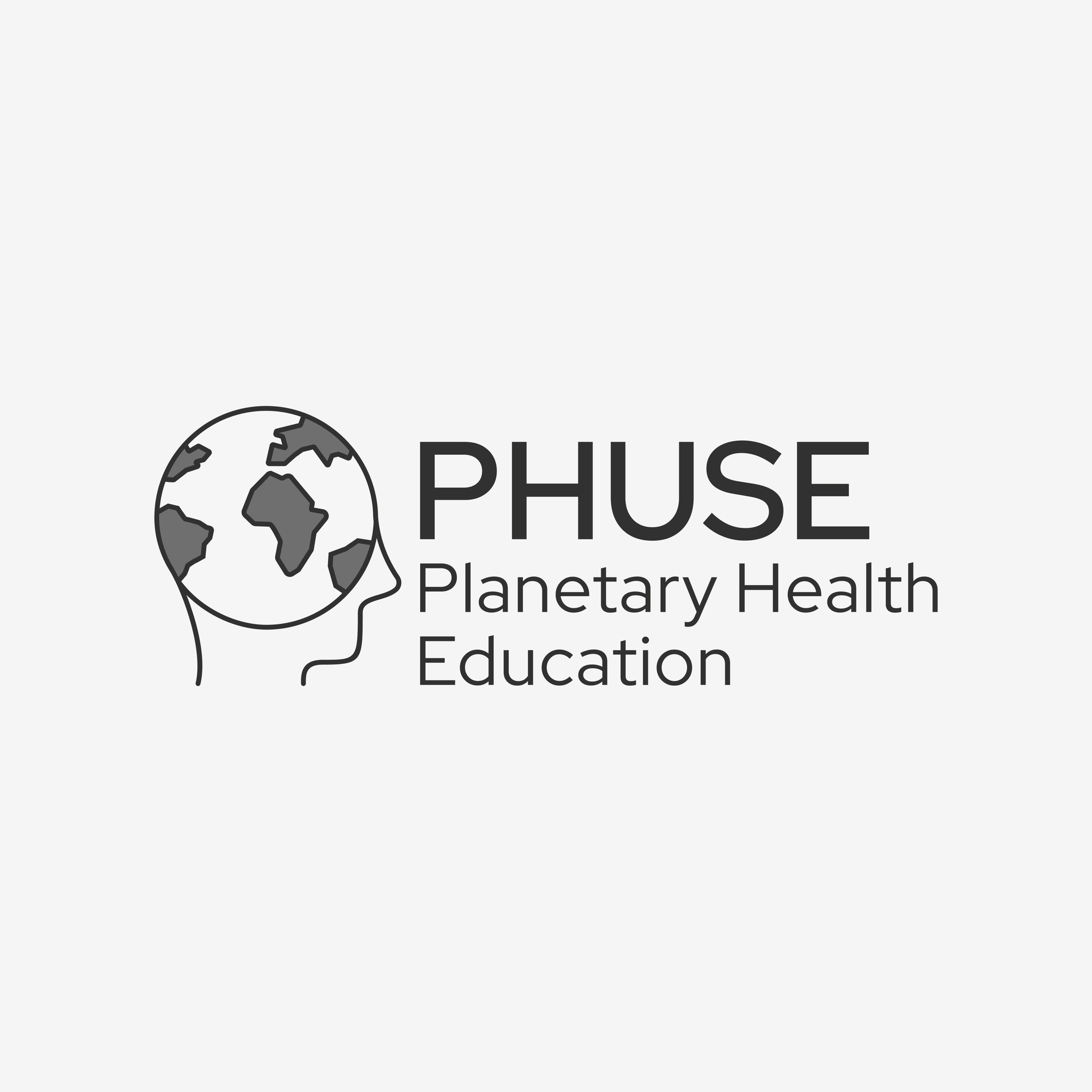
A black and white variant required particular consideration, as the logo communicates its full strength and positivity through color. The monochrome version was carefully adjusted to maintain contrast, legibility, and impact while preserving the core idea of the mark.
Structure & Lo-Fi Wireframes
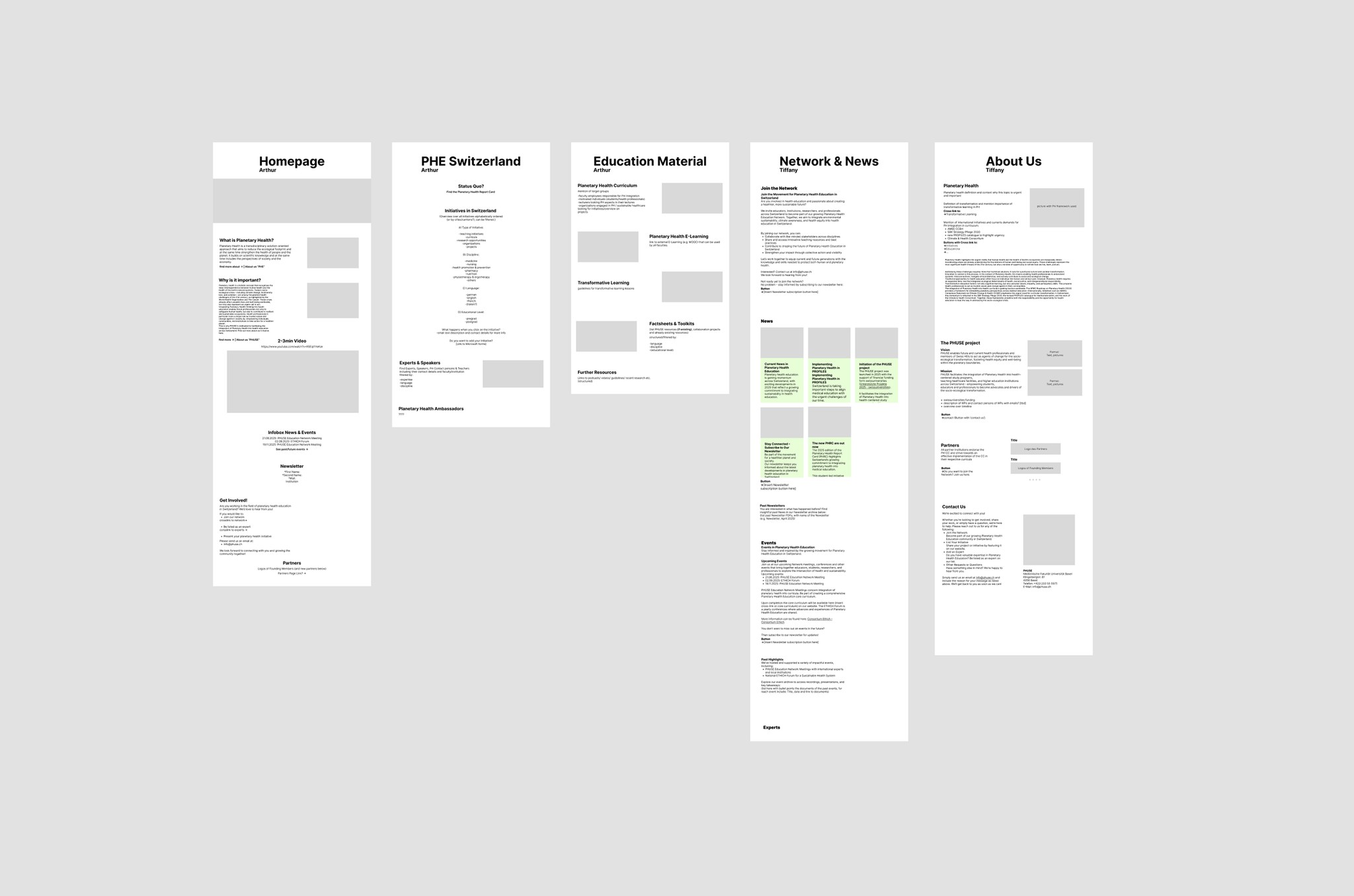
The development of the website prototype began with structuring the content and defining a clear information architecture. Based on the client’s material and objectives, we translated the strategic goals of the platform into a logical page hierarchy and user flow.
In Figma, we started with low-fidelity wireframes to focus on layout, navigation, and content prioritization before moving into visual refinement. The goal was to create a clear, accessible, and scalable structure that supports both first-time visitors and experienced members of the Planetary Health network.
In Search of a Concept
At the beginning of the process, we explored different layout directions and structural approaches to find the most suitable concept for the platform. Since the website is content-heavy and academically oriented, it was important to test variations that balanced clarity, hierarchy, and navigation.
We experimented with different ways of organizing information, section structures, and navigation models before defining the final direction. Throughout this phase, we kept the client involved and regularly shared progress to align on structure and priorities.
Layout Concept & Design System
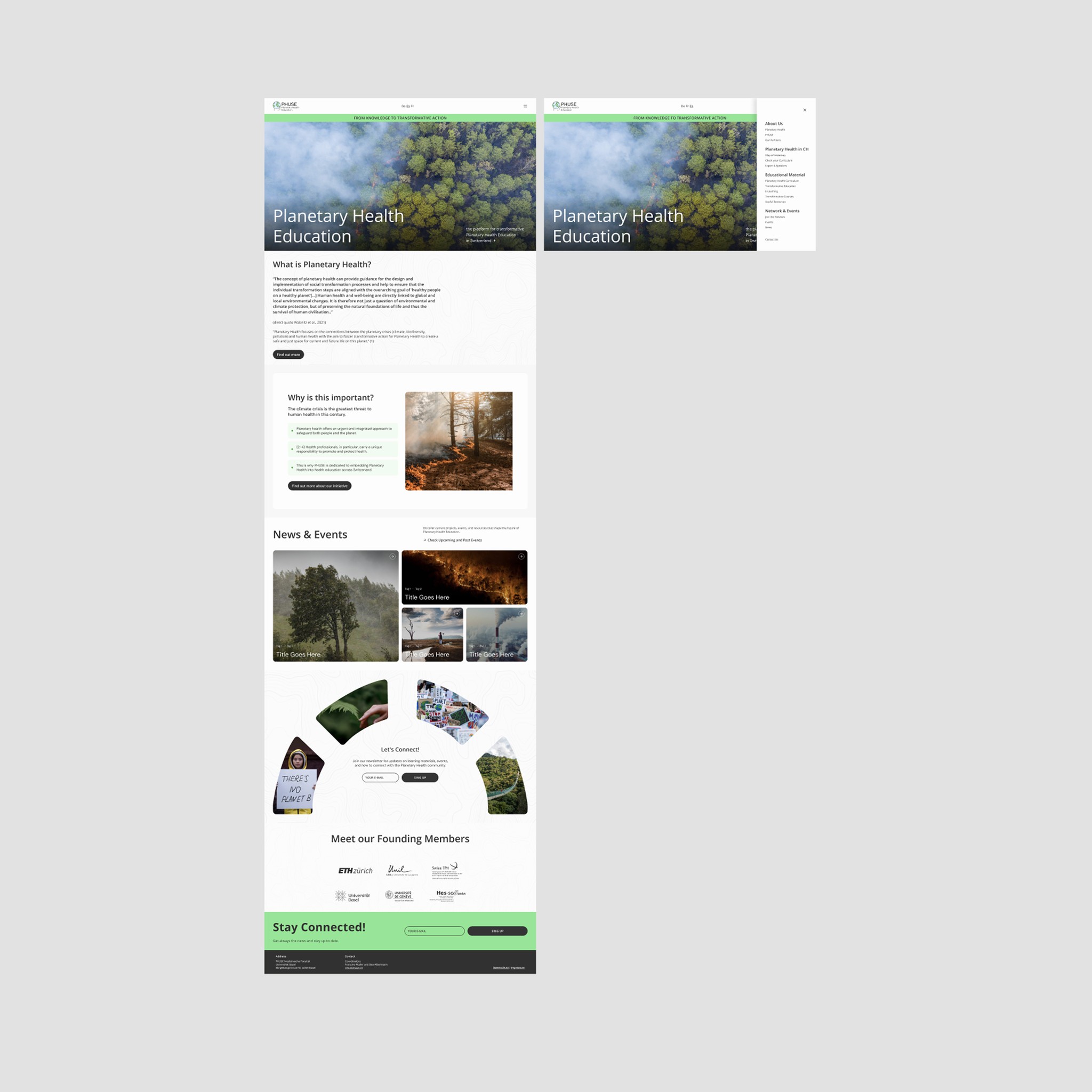
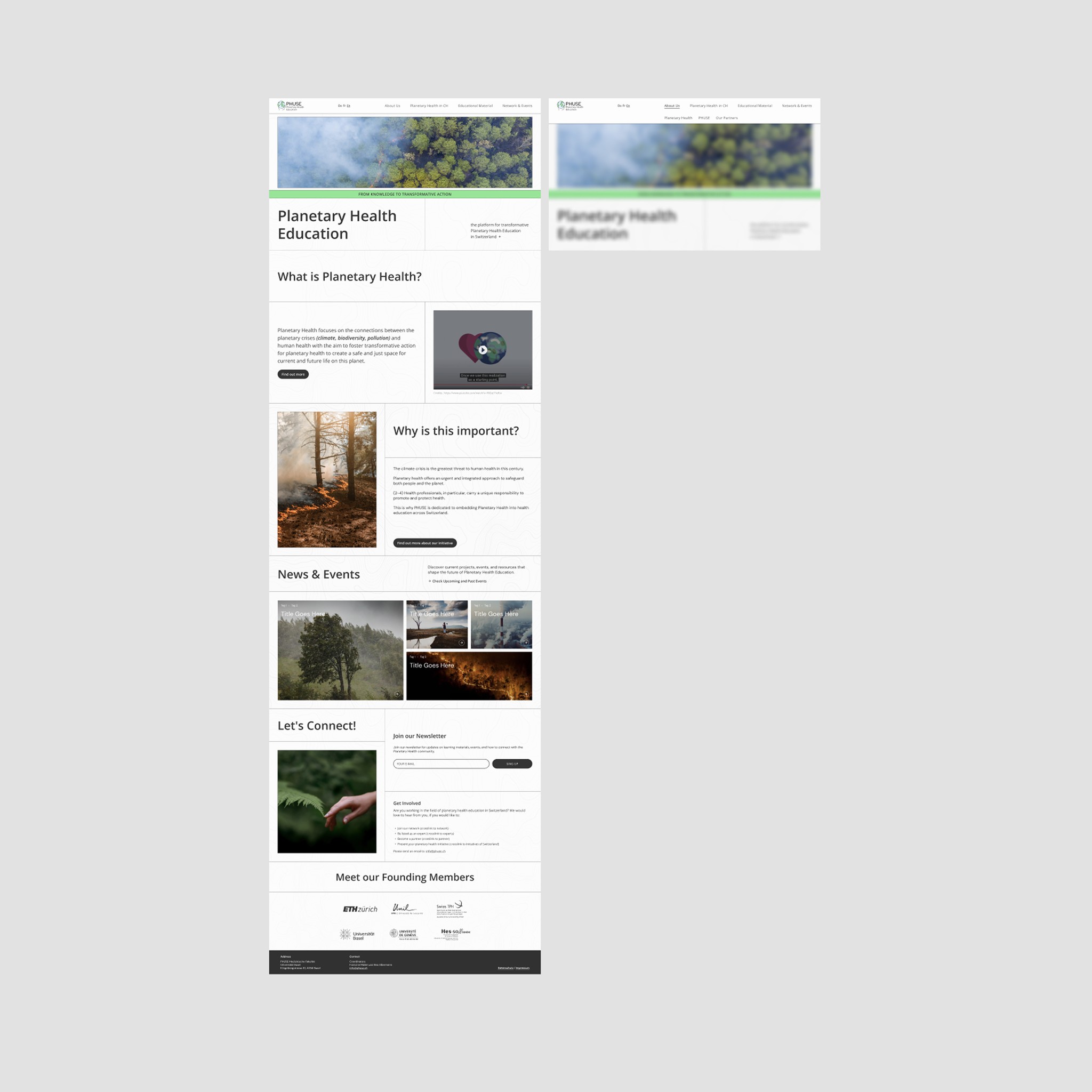
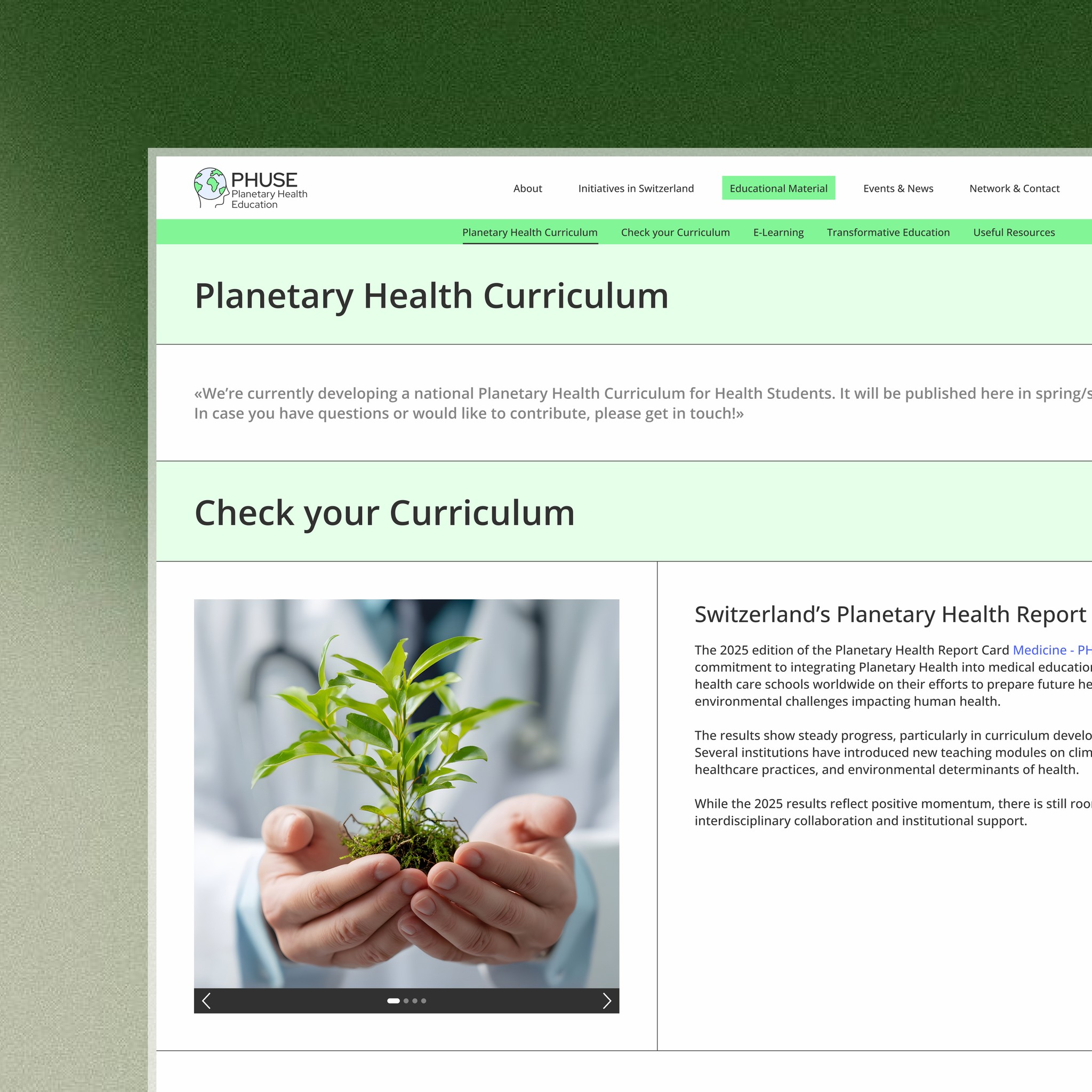
Since the website contains a large amount of text, we chose a layout based on clear line dividers to structure the content and separate sections visually. This approach helps break down longer pages and improves readability. We also worked with slightly larger text sizes to make the content easier to scan, especially in more academic sections.
On the desktop version, we introduced a clear sub-navigation to support orientation and allow users to move between sections more efficiently.
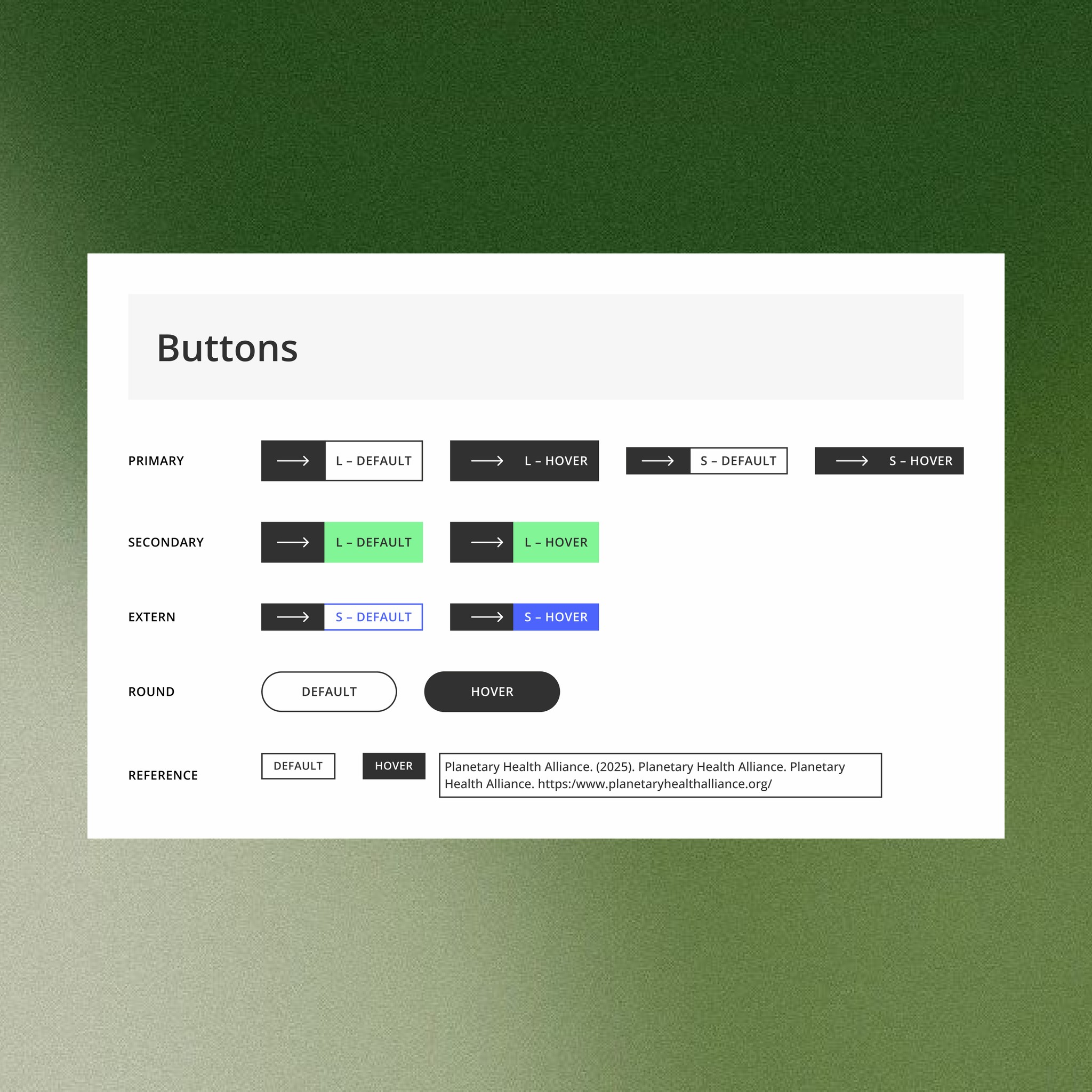
In addition, we defined a simple design system to ensure consistency across the platform. This included clear rules for typography, button styles, color usage, and spacing. Buttons follow a consistent hierarchy, text sizes are structured for headings and body content, and spacing is used deliberately to create rhythm and clarity throughout the interface. Colors were also used functionally, for example, purple-blue indicates external links to help users distinguish them from internal navigation.
Project Takeaways
This project reinforced the importance of structure and clarity in content-heavy platforms. Developing the identity and digital foundation required balancing concept, usability, and client feedback throughout the process.
I am grateful to have been part of this initiative and to contribute to its foundation. The final website was later developed and coded by Sitewalk, building upon the structure and prototype we created.